"DO NOT PAY YOUR 2026 PROPERTY TAX BILL IF YOU HAVE A MORTGAGE IMPOUND ACCOUNT THAT PAYS YOUR TAXES." Payette County's treasurer posted that warning, in those exact capital letters, for this year's tax cycle. It exists because homeowners keep paying the bill twice, once through their mortgage escrow and once on their own, convinced the county missed something. Nobody is careless here. The system itself is the trap.
Fruitland sits on the Idaho side of the Snake River, connected to Ontario, Oregon by a short bridge crossing at Northwest 16th Street. For a lot of buyers closing on a Fruitland home, Ontario is not a nearby town they've heard of. It's where they lived last month, where their job still is, where they paid property taxes on a completely different calendar. That proximity is the whole story here. It's also the reason the tax mechanics at a Fruitland closing catch people off guard more often than they would almost anywhere else in West Central Idaho.
Two Tax Years That Point in Opposite Directions
Idaho runs its property tax year from January 1 through December 31, and it bills in arrears. That means the bill mailed in late November covers the year that is already ending, not the year ahead. Oregon runs a completely different calendar: its tax year runs July 1 through June 30, with payment due by November 15. Neither state is doing anything unusual by its own logic. The friction shows up only when someone moves between the two systems and assumes the one they know still applies.
For the current 2026 tax cycle, Payette County mailed bills by the end of November 2026, with the first installment due before midnight on Monday, December 21, and the second not due until June 21, 2027. Each installment carries its own 2 percent penalty if paid late, and if the second installment goes unpaid past its due date, interest accrues at 1 percent a month, calculated retroactively to January 1, 2027. None of that resembles Oregon's November 15 due date on a fiscal year that already started the previous July. A buyer who closes on a Fruitland home this fall, still thinking in Oregon terms, can misjudge which year's tax obligation they're actually stepping into.
That mismatch matters more in Fruitland than in most Idaho towns because a meaningful share of the town's buyer pool is coming from exactly that direction. The area functions less like a Boise suburb and more like a satellite of the Ontario labor market, anchored by steady growth from the St. Alphonsus Fruitland Health Plaza and the St. Luke's Fruitland Medical Plaza. People crossing the bridge for work end up buying on this side of it too, and they bring their Oregon assumptions with them.
What Actually Happens at the Closing Table
Because Idaho bills a full calendar year after the fact, nobody at a spring or summer closing has an actual tax bill in hand for the current year yet. Escrow has to work from the most recent number available and split it fairly. Here's the sequence in practice:
- Idaho assesses the whole calendar year but doesn't mail the bill until late November, well after most closings have already happened.
- The title company prorates using the prior year's tax amount as a stand-in, since the real number for the current year does not exist yet at closing.
- The seller is charged, as a credit to the buyer, for every day they owned the home from January 1 through the closing date.
- The buyer takes on responsibility for every day from the closing date through December 31, even though no bill for that period has been generated yet.
- When the actual bill lands in November, whoever owns the home at that point pays it, in two installments, regardless of who lived there earlier in the year.
Say a Fruitland home carries an annual tax bill somewhere in the range Payette County typically reports, call it $1,250 for illustration. A buyer closing on June 1 would see roughly five months of that figure credited from the seller at closing, and the remaining seven months become the buyer's responsibility when the real bill shows up in November. If either side is still picturing Oregon's July-to-June cycle, the math on the settlement statement won't line up with what they expected to owe, and that confusion tends to surface right when nobody wants a delay.
The New Construction Wrinkle
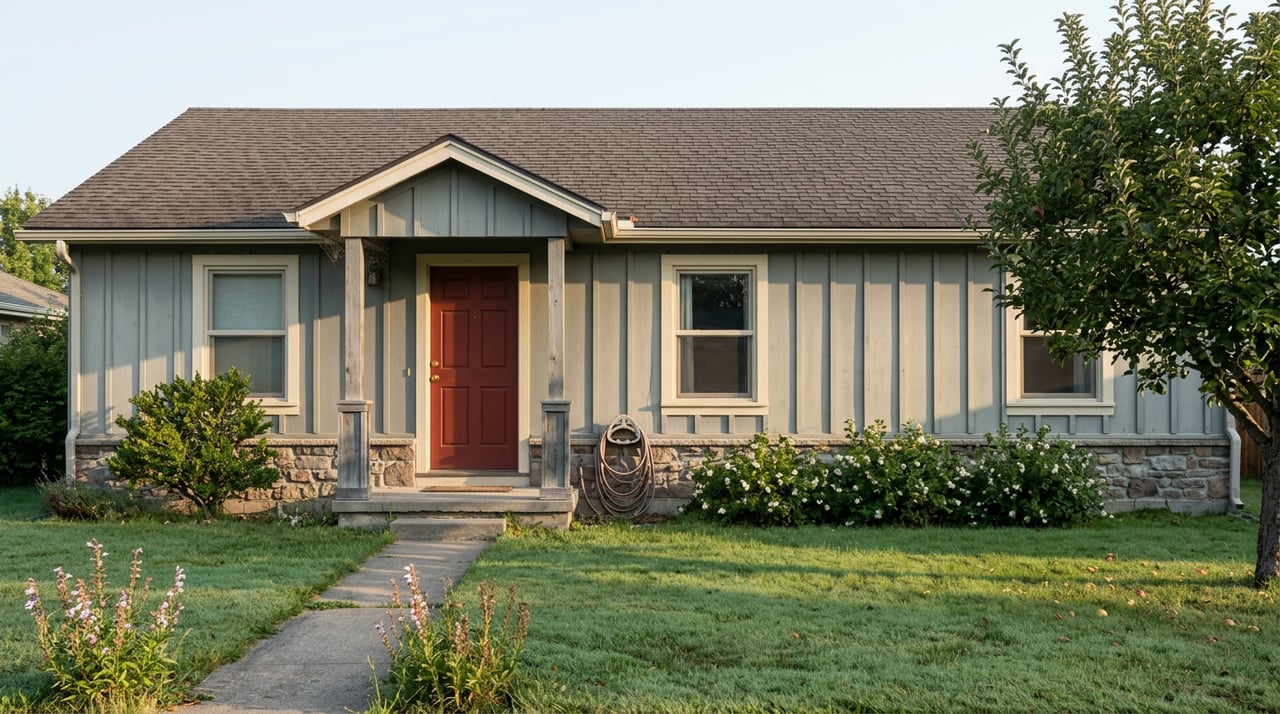
Fruitland has a run of newer construction on its west side, close to the river and the Oregon line, and that inventory carries its own version of this problem. If a home is completed and assessed after April, Payette County issues what it calls a "Subsequent/Occupancy" bill, separate from the standard November "Real Property" bill that covers the land. A buyer closing on a brand-new house might get one bill for the lot in November and a second bill later for the completed structure once the county catches up on the assessment. Buyers used to a single annual tax bill, wherever they're moving from, are rarely expecting two.
A Low Rate Doesn't Mean a Small Surprise
It would be easy to assume Fruitland's tax friction comes from a high rate. It doesn't. Payette County's effective property tax rate runs close to 0.35 percent, below Idaho's statewide average of about 0.49 percent and well under the national median of 1.02 percent. Across the county's cities, median annual tax bills range from around $1,006 in the town of Payette up to $1,504 in Parma, a real but modest spread. A low rate is genuinely good news for long-term ownership costs. It has nothing to do with whether the arrears proration at closing gets calculated correctly. The rate determines the size of the bill. The calendar determines whether anyone gets blindsided by it.
What This Means If You're Selling in Fruitland
If you're preparing to list, the fix here isn't complicated, but it does need to happen before a buyer's assumptions collide with Idaho's timeline at the closing table.
- Call the Payette County Treasurer's office directly for the current payment history and exact figures rather than relying on last year's paper bill in a drawer.
- Check whether the home has any pending Subsequent/Occupancy assessment if it was built, finished, or added onto within the past year.
- Let your agent flag the state's Property Tax Reduction program, still widely called the Circuit Breaker, for buyers who may qualify once they own the home. It can cut up to $1,500 off an eligible owner's bill, but the application window closes every April 15, and missing it means waiting a full year.
- If the parcel carries irrigation shares tied to district deliveries such as Noble Ditch or Black Canyon Irrigation, disclose those separately. They carry real dollar value and real annual obligations, and none of it shows up on the county tax bill at all.
None of this is about avoiding a bad deal. It's about making sure the numbers on the settlement statement match what both sides actually believed they were agreeing to.
FAQ
I'm moving from Ontario. Will my Oregon tax habits really cause a problem?
They can, mainly around timing rather than amount. Oregon's fiscal year runs July through June with a November due date, while Idaho bills the calendar year in arrears with installments in December and June. If you're used to Oregon's rhythm, the Idaho proration on your settlement statement can look off even when it's calculated correctly.
Does Payette County's low rate mean I can skip building a tax reserve into my budget?
No. The 0.35 percent effective rate is genuinely low compared to the national median near 1.02 percent, but the bill still needs to be paid on Idaho's schedule, in two installments, and a mortgage escrow account needs to be funded correctly to avoid the double-payment problem the county specifically warns about.
What if I'm closing on new construction before the county has assessed the finished home?
Expect the possibility of two separate bills: the standard November bill covering the land, and a later Subsequent/Occupancy bill once the county assesses the completed structure. Ask your closing team to confirm which stage your specific property is in before you sign anything.
If you're weighing a purchase on either side of that river, or getting ready to list a Fruitland home and want the tax timeline explained in plain terms before a buyer's assumptions run into it, Malia Bumgarner has spent years walking West Central Idaho buyers and sellers through exactly this kind of detail. Let's Connect.