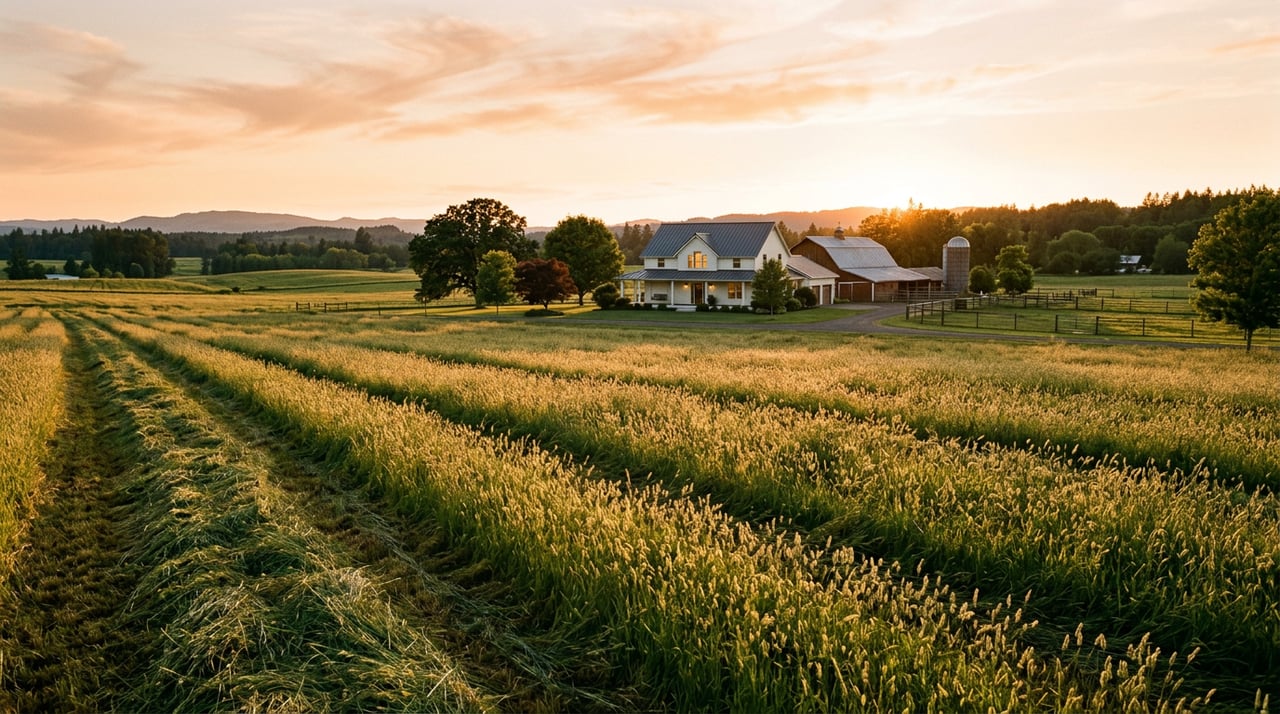
Two parcels went up for sale within a few miles of each other outside Fruitland. One listing described "20.54 irrigated acres" with 22 shares of water from Noble Ditch Co., spelled out like a line item on an invoice. The other, a smaller lot with no HOA and no CC&Rs, simply mentioned "Black Canyon irrigation water" as a feature, the way you'd mention a covered patio.
Both phrases mean water reaches the property. Neither phrase tells a buyer the same thing about who owns that water, how it's billed, or what happens to it after closing. That gap is the whole story.
One River Valley, Several Different Owners
Fruitland sits inside a patchwork of irrigation providers that predates the town's current subdivisions by more than a century. A regional water infrastructure planning document maps at least six separate organizations holding assessed acreage across the Fruitland and Payette vicinity: Black Canyon Irrigation District, Lake Reservoir Co., Lower Payette Ditch Co., Noble Ditch Co., Little Willow Irrigation District, and Letha Irrigation & Water Co.
| Provider | Structure | Approx. area served |
|---|---|---|
| Black Canyon Irrigation District | Public irrigation district | 95,187 acres |
| Lake Reservoir Co. | Private company | 85,752 acres |
| Lower Payette Ditch Co. | Private ditch company | 21,556 acres |
| Noble Ditch Co. | Private ditch company | 15,264 acres |
| Little Willow Irrigation District | Public irrigation district | 6,110 acres |
| Letha Irrigation & Water Co. | Private company | 5,993 acres |
Those figures describe total service territory across the broader area, not acreage inside Fruitland's city limits specifically, and a single parcel is typically served by one provider, not all six. The point isn't the total. It's that "irrigation" on a Fruitland listing is shorthand for one of several legally distinct arrangements, and the listing sheet rarely says which one.
Some of that fragmentation goes back to how the valley was settled. Early accounts of the Payette Valley describe farmers organizing their own ditch companies parcel by parcel, one group forming the Farmers Cooperative Irrigation Ditch Company in 1901 after a failed New York-financed venture left them without water. That history is why a town this size still has this many separate water providers instead of one utility.
Gravity Water and Pumped Water Are Not the Same Promise
Black Canyon Irrigation District is the largest single provider touching the area, and even within that one district, water doesn't arrive the same way everywhere. The district's second unit split into two sections: a gravity-fed area completed in 1940 covering 28,000 acres, and a separate pumped area whose distribution system wasn't finished until 1949, built around the C-Line Pumping Plant. The main canal itself diverts from the Payette River at Black Canyon Dam.
That distinction matters at the parcel level. Gravity delivery depends on canal flow and seasonal timing, but it doesn't depend on a pump staying powered and maintained. Pumped delivery adds an electrical and mechanical link between the river and a buyer's sprinkler heads, one more point where service can pause for repair. A buyer comparing two Black Canyon-served properties on price per acre alone is comparing yard water on two different delivery systems without knowing it, unless someone tells them which section of the district each parcel sits in.
None of this makes one type of delivery better than the other. It makes them different products that happen to share a name on a listing sheet.
Shares Are Not Always Attached to the Deed
The private companies work on a different structure entirely. The Idaho Department of Water Resources describes these mutual companies plainly: a company holds the water right, members own shares in the company, and water is allocated annually by share while shareholders pay assessments to maintain the ditch system. That's a different legal relationship than a public irrigation district, which assesses land directly and bills more like a property tax that runs with the parcel.
Shares in a company like Noble Ditch Co. or Lower Payette Ditch Co. belong to the shareholder, not automatically to whoever holds the deed. That's why the Noble Ditch listing mentioned above spelled out a specific number, 22 shares, the way a seller would list a specific piece of equipment included in a sale. Shares like these have to be identified, verified, and formally transferred alongside the property, and that step doesn't happen by default just because the sale closes.
For a buyer, this means asking a direct question before writing an offer: does this parcel come with shares in a private company, and if so, has the seller confirmed those shares will transfer? For a seller, it means locating that paperwork before a buyer's title company asks for it during escrow, rather than scrambling once a contingency deadline is already ticking.
What This Means Before You Write or Accept an Offer
A few steps make the difference between finding out which system serves a property in week one of a transaction versus finding out during an inspection contingency:
- Ask which specific provider serves the parcel. "Irrigation water" on its own doesn't answer this. A property inside Black Canyon Irrigation District's boundary is a different situation than one carrying shares in Letha Irrigation & Water Co.
- If the provider is a private company, confirm in writing whether shares convey with the sale and whether the company requires any transfer paperwork or approval before the new owner is recognized.
- If the provider is a public district, check whether the assessment is current and whether any bonded improvement costs are still being paid down on that parcel.
- For Black Canyon-served parcels, ask whether delivery is gravity-fed or pumped, since that affects both seasonal reliability and who's responsible for repairs upstream of the property line.
- Request the last few seasons of irrigation billing or assessment history alongside the standard water bill, since these arrive from separate entities and rarely show up on the same statement.
None of this is a reason to walk away from an otherwise good property. It's simply due diligence that takes an afternoon of phone calls and saves a renegotiation later.
FAQ
Does every property in Fruitland have irrigation water rights? No. Some parcels carry rights or shares tied to one of the providers above, and others rely entirely on city or domestic well water for all purposes. Whether a specific address has any irrigation entitlement at all has to be verified parcel by parcel.
If a listing says "irrigation included," is that legally binding? The listing description itself isn't the transfer document. What actually conveys is whatever is written into the purchase agreement and confirmed through the title company or the irrigation provider directly. Treat marketing language as a starting point for questions, not as the final word.
Who do I call to find out which provider serves a specific parcel? Start with the Payette County Assessor's office to check the parcel's tax roll for any recurring irrigation assessment, then contact the relevant district or company directly to confirm boundaries and share status. The Idaho Department of Water Resources also maintains records on water rights tied to specific parcels.
Fruitland's water history is part of what makes the ground here worth farming, and it's also exactly the kind of detail that separates a smooth closing from a surprised one. If you're weighing a property in Fruitland or anywhere else across West Central Idaho and want a straight answer on what's actually attached to the land, Malia Bumgarner is glad to help you sort it out before you write the offer, not after. Let's Connect.
This article is general information, not legal, tax or financial advice. Consult a qualified professional about your situation.