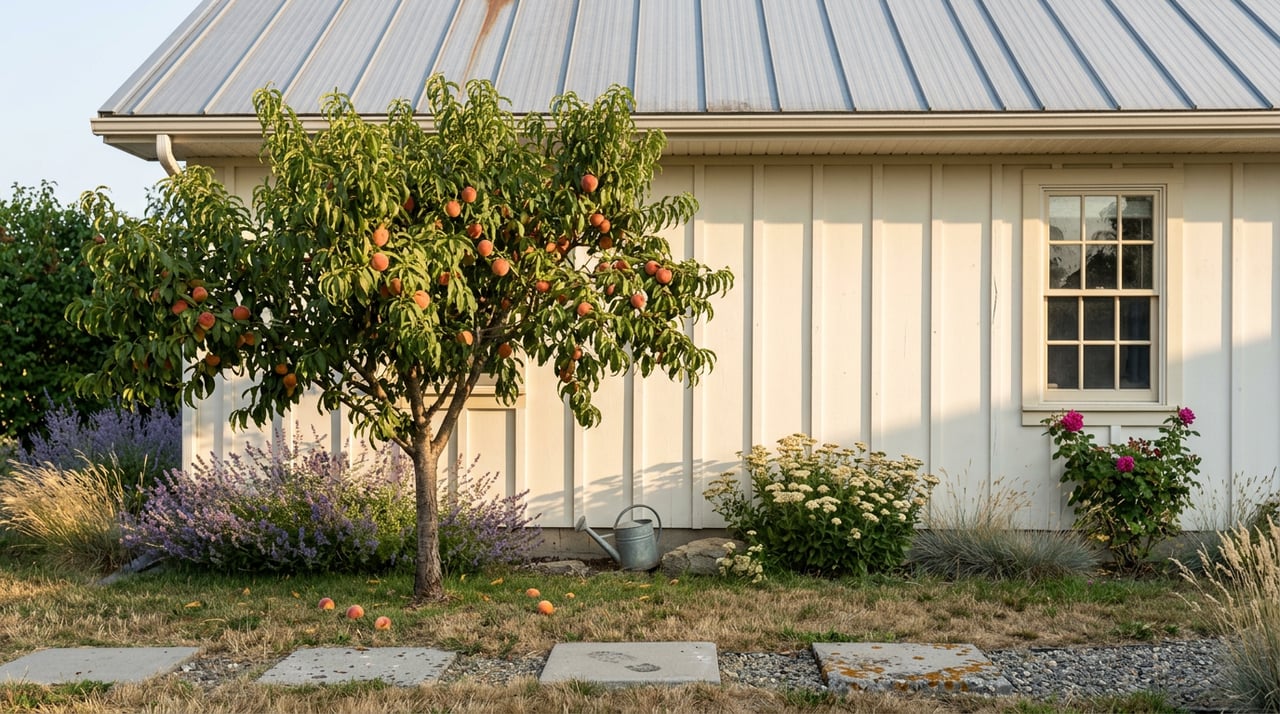
There is a stretch of summer, roughly mid-July through the end of August, when Fruitland actually earns its name. The peaches come off the trees in Emmett and land at stands along Highway 30 the same afternoon. Sweet corn shows up in pickup beds. The tomatoes stop being pale and start tasting like tomatoes. If you live here, you already know the season is happening. What is easier to miss is how quickly it turns over.
The thesis of this post is small and practical. Fruitland's harvest is not a single moment. It is a rotating six-week calendar, and the residents who eat best are the ones who shop it week to week rather than making one big Saturday run in early August and calling it done.
What is actually ripe this week
The Treasure Valley's growing season follows a predictable order, and the stands rotate with it. If you plan your week around what just came in rather than what is still there from last week, the price per pound drops and the flavor climbs.
- Mid to late July. Cherries are winding down. Raspberries and the first apricots are peaking. Sweet corn is starting. Cucumbers, beets, and early tomatoes are on the tables.
- Late July into early August. Peaches begin in earnest. Blackberries hit. Sweet corn is fully in. This is the week to buy in volume if you freeze or can.
- Mid August. Melons and watermelons arrive. Tomatoes are at full weight. Peaches are still coming, with later varieties replacing the earlier ones. Peppers start showing up in flats for roasting.
- Late August into early September. Plums and prunes. Winter squash begins. The first apples. The corn maze at AC&D Farms is not open yet, but the stand is already stocking fall crops alongside the last of summer.
The point is not to memorize the calendar. It is to notice that the peach you buy on July 20 and the peach you buy on August 20 came off different trees, from different orchards, and taste different. Shopping the same stand three weeks apart is a different grocery trip.
Stands that reward the drive
AC&D Farms is the anchor for most residents. They open in mid-April with asparagus, spinach, and radishes, and by the height of summer the tables carry beets, carrots, cucumbers, berries, cherries, sweet corn, tomatoes, potatoes, melons, and watermelons alongside locally baked bread, honey, and jam. They grow some of what they sell and source the rest from other Idaho and regional farms, which is how they cover the full season instead of only their own harvest window.
Red Barn Produce sits on the outskirts of town and doubles as a deli and coffee stop, which makes it the practical choice when you want to pick up dinner ingredients and also feed the person you brought with you. It is the kind of place that shows up in national write-ups of small Idaho towns, most recently in an Islands piece that framed Fruitland as orchard country between two rivers.
Fruitland Produce at 2001 Highway 30 W is the straightforward stand for a fast in-and-out. Crawford Farms Produce Stand is another local option, and the Raspberry Patch on Maple Court is exactly what the name suggests, run out of a residential lot and worth the stop during raspberry weeks. Blessed Family Farms, listed on LocalHarvest as a small family operation producing no-spray produce, fills the niche for shoppers who care about how the crop was grown.
If you are willing to drive a little, the U-pick corridor sits over in Emmett along South Slope Road. Williams Fruit Ranch runs cherries, peaches, plums, prunes, and apples on a U-pick and pre-picked basis from mid-June through late October, per PickYourOwn's Southwestern Idaho list. From New Plymouth or Fruitland it is Highway 52 east, right onto Star Lane, left onto South Slope. It is the closest real U-pick to town, and it is the reason a lot of Fruitland freezers have cherries in February.
Where the produce lands on a plate
Buying a flat of tomatoes is one thing. Not cooking that night is another. A few local kitchens do the work for you.
Black Cow Eats and Drinks, formerly the Black Cow Cafe and Mercantile, is the closest thing downtown has to a produce-forward menu. Their macaroni and cheese has picked up enough of a reputation to get name-checked in the same Islands feature, which is a fair bet for a Wednesday night when the last thing you want to do is chop.
Hitchcock Station at 402 SW 3rd Street runs a lunch and dinner service Wednesday through the weekend, with the kitchen closed early in the week. The menu leans salads and sandwiches, which is where local tomatoes and greens do their best work. Ali's Mexican Restaurant on NW 21st, Mackey's Steakhouse and Pub, Ogawa's, Rustic Pig BBQ, Warship's Grill, and 9 Juan Juan Burritos round out the sit-down options that Fruitland residents actually rotate through.
For coffee, Bordertown Coffee and Bake Shop and Jack Henry Coffee House both operate in the area, with Jack Henry also running locations in Ontario and Caldwell. Agape Coffeehouse is the other option locals cite. Any of the three works as the first stop on a harvest Saturday, before the stands get busy around ten.
A Saturday shape
The residents who get the most out of the season tend to move in roughly this order:
- Coffee first, around eight, at Bordertown, Jack Henry, or Agape. The stands are quieter earlier and the produce that came in Friday afternoon is still on the front tables.
- One anchor stand, usually AC&D or Red Barn, for the bulk of the shop. Melons and corn go in the truck bed. Tomatoes and berries ride up front.
- One specialty stop. Raspberry Patch for berries in July. Fruitland Produce for a fast add-on. Border and Blooms Flower Farm during its season if the table needs flowers.
- A park to burn an hour. Fruitland Community Park downtown has a splash pad and a playground. Crestview Park to the south has the same, plus more room to spread out. Mesa Park on the east side is the sports-heavy option.
- The Payette River Greenbelt for a walk that resets everyone before the drive home. AllTrails clocks it at about three miles out-and-back with a 55-foot elevation gain, paved for the first four-tenths of a mile and natural surface after that.
- Dinner at Black Cow or Hitchcock Station if the flat of tomatoes on the counter can wait one more day.
That is the shape. It works because it uses the parts of Fruitland that were already there, in the order they make sense.
Why the six-week window matters here
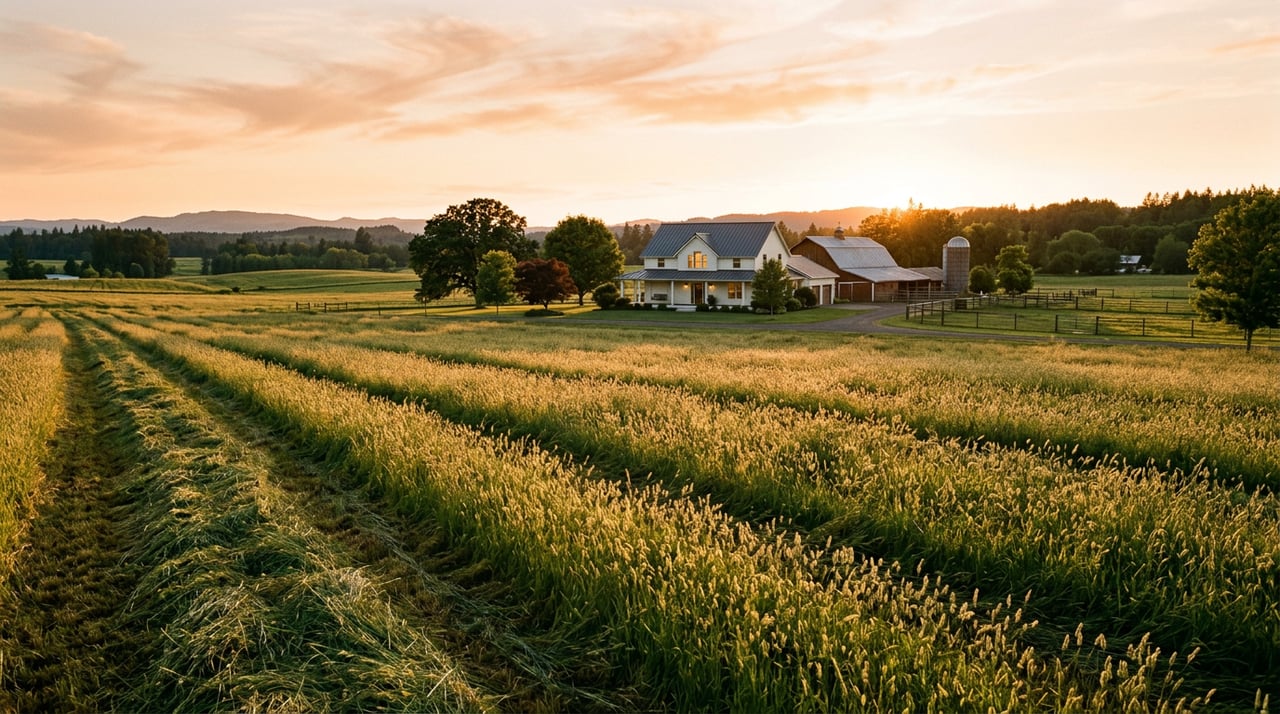
Fruitland's orchard identity is not marketing. It traces to an 1897 homestead planted with apples and plums, and it holds up in the numbers. Payette County's 2022 USDA agriculture census counted 574 farms across 171,424 acres, of which 62,350 acres were irrigated. That is a working farm economy, not a nostalgic one, and it is why a town of roughly six thousand people has this many produce stands within a fifteen-minute radius.
The practical takeaway is that if you live here, the season is a resource that is easy to underuse. Six weeks is not long. Peaches that were $2 a pound in early August will not be $2 a pound in October, and they will not taste the same in a supermarket clamshell either. The stands will still be there next summer, but this year's crop is on the table right now.
If you are thinking about the longer arc, whether that is a first home in town, a few acres with room for your own trees, or a working orchard property somewhere in the Weiser River Valley, that is the conversation Malia Bumgarner and Creed Noah Real Estate Company are set up to have. Let's connect when you are ready.